Jul 23, 2026
Ready Formula vs. Custom Formulation: Which Route Fits a Growth Skincare Brand?
Choose the right skincare development route by balancing product goals, customization needs, launch speed, packaging and customer value.
Answer-first Summary
Choose a ready-formula route when the product direction is clear, speed matters and meaningful differentiation can come from positioning, sensory adjustment, packaging or line architecture.
Choose custom formulation when a defined technical problem, sensory target or defensible product concept cannot be served by a suitable mature formula.
Neither route removes the need for:
- market review
- packaging compatibility
- safety substantiation
- testing coordination
- production controls
“Custom” sounds more valuable. “Ready” sounds faster. That framing is convenient—and often wrong.
A growth brand does not need the most complicated development route. It needs the route that protects the product idea without adding work customers will never notice or pay for.
The decision should come from the brief:
- target market
- customer
- product job
- sensory target
- channel
- price position
- packaging
- first-order quantity
For guidance on sorting out your project demands, read our article:
how to write a skincare product brief
(Internal Link: /insights/how-to-write-a-skincare-product-brief)
A mature formula can still support a distinctive launch when the brand has a sharp audience, useful product architecture and a coherent pack experience.
A bespoke formula can still become generic when the brief says only:
- “premium”
- “clean”
- “full of trending actives”
Route choice is not a status symbol.
It is a resource-allocation decision.
What the Two Routes Actually Mean
Route 1: Start From a Mature Formula
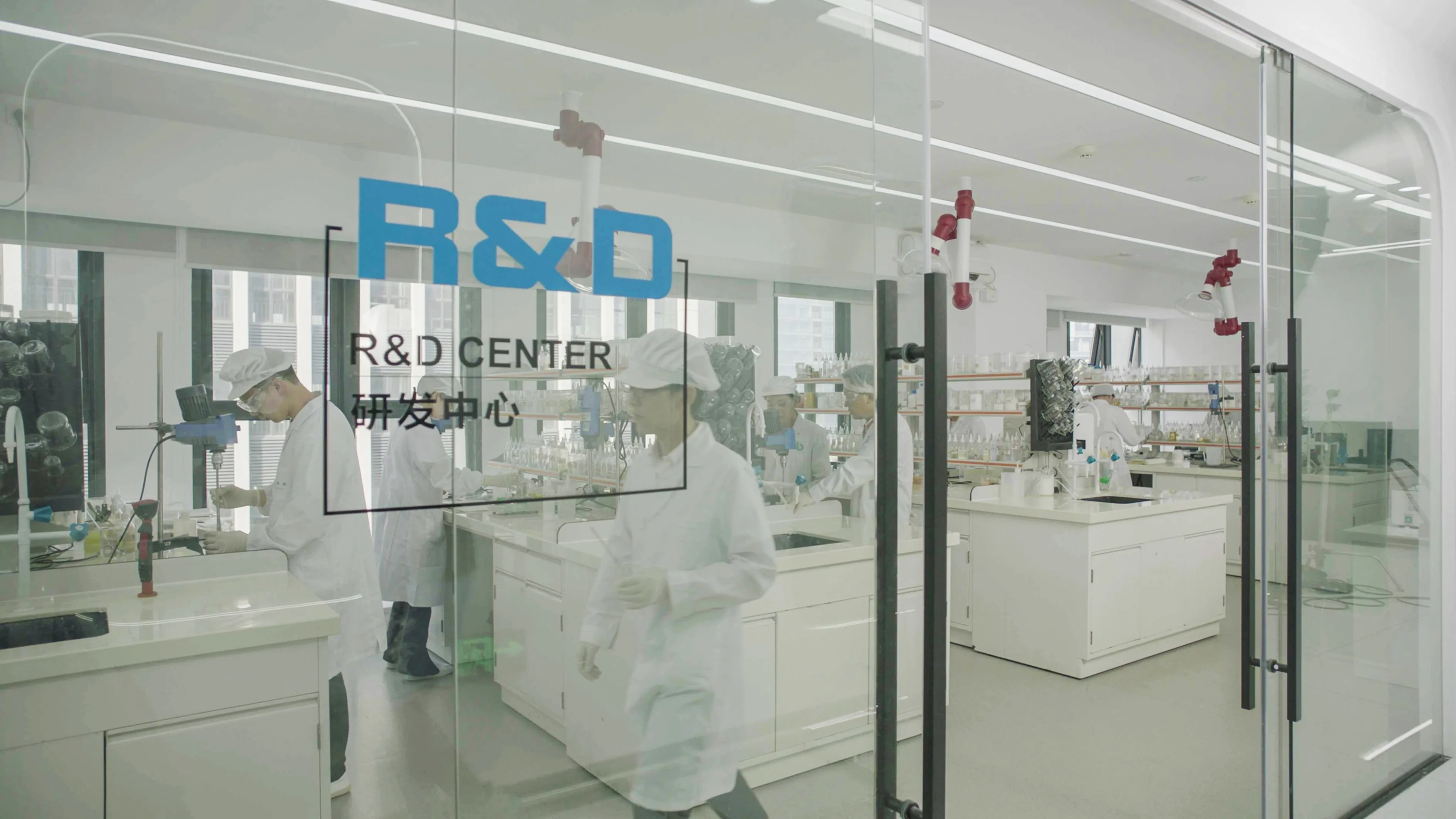
If you want to know more about our lab work, check out:
A mature-formula route begins with an existing development base that has already progressed beyond a blank laboratory concept.
The brand and development team screen that base against the intended product, then confirm:
- what can be adjusted
- what must be re-evaluated if it changes
This route is strongest when:
- the core product job is familiar
- the launch window matters
- the target price is disciplined
- differentiation does not depend on a novel technical system
It can reduce unnecessary early exploration, but it is not:
“Pick a jar and add a logo.”
Packaging fit, target-market requirements, claims, label content and project-specific testing still need decisions.
Route 2: One Client, One Formula
A bespoke route starts from a defined problem worth solving.
The reason may be:
- a demanding sensory profile
- a product format that available bases cannot deliver
- a specific compatibility constraint
- a product concept whose value depends on a distinct formulation direction
Custom development gives the team more variables to control, but every extra variable creates review work.
The brand must be able to explain:
- what success looks like
- which trade-offs are acceptable
- how sample decisions will be made
“Make it unique” is not a testable brief.
Seven Questions That Reveal the Right Route
1. Where Must the Differentiation Live?
If differentiation lives mainly in:
- audience insight
- routine design
- format
- packaging
- communication
a mature formula may be enough.
If it lives in a performance, texture or delivery problem that existing bases cannot meet, custom development becomes more relevant.
2. Is the Desired Outcome Testable?
Define observable criteria:
- spread
- absorption
- residue
- pilling
- dispensing
- fragrance tolerance
- colour range
- use under other routine products
Bespoke work is difficult to manage when approval depends only on a founder saying:
“More premium.”
3. What Is the First Target Market?
Market choice affects:
- ingredient review
- labeling
- evidence
- product notification or listing responsibilities
- claim boundaries
The formula route cannot be separated from the intended market.
4. How Fixed Is the Packaging?
A formula and its container operate as a system.
Factors include:
- viscosity
- air exposure
- pump output
- dropper control
- component materials
- decoration
A custom formula built before the pack is understood may create avoidable rework.
5. What Must the Launch Timing Include?
“Formula ready” is not the same as “launch ready.”
Samples, revisions, compatibility work, safety support, documentation, packaging procurement and production all sit on the timeline.
Custom development normally adds uncertainty because more decisions remain open.
6. What Quantity and Cost Structure Can the First Launch Support?
The formula route is only one part of feasibility.
Packaging component MOQs, decoration setup, fill volume, testing and production change:
- starting quantity
- unit economics
7. What Will the Customer Genuinely Notice?
Spend development effort where it changes:
- customer experience
- brand defensibility
Do not pay for complexity that exists only in an internal ingredient story and cannot be explained responsibly.
A Practical Decision Matrix
Decision Factor | Mature-formula Route | Custom-formulation Route |
|---|---|---|
Best starting condition | Clear product direction; suitable base exists | Defined unmet technical or sensory need |
Primary advantage | Efficient route to a relevant starting point | Greater control over the defined formulation problem |
Main risk | Treating an existing base as automatically launch ready | Adding time and iterations without a measurable reason |
Brief quality needed | Market, customer, position, pack and sensory direction | All mature-route inputs plus explicit success criteria |
Testing and compliance | Still project- and market-specific | Still project- and market-specific; changes may expand review |
Packaging | Must be confirmed against the selected formula | Should be coordinated early during development |
Route trigger | A suitable base can meet the brief | No suitable base can meet the material requirement |
Three Mistakes That Make Either Route Fail
1. Choosing custom formulation only because “custom” sounds premium.
2. Choosing a mature formula only because the team wants a fast quotation.
3. Freezing ingredients before market, claims, pack and price decisions are aligned.
How BIO-TIDE Structures the Decision
If you want to compare all development paths intuitively, visit:
BIO-TIDE can work from development resources that include 80,000+ mature formulas or through One Client, One Formula development.
The useful question is not how many formulas exist.
It is whether a suitable starting point meets the brief and what evidence, packaging and production decisions remain.
Typical starting MOQ is around 5,000 pieces, depending on the product and packaging route.
The development route should be confirmed together with:
- the target market
- category
- positioning
- pack
—not through a generic catalogue request.
Frequently Asked Questions
Is a ready formula the same as private label?
Not always.
Terms differ between suppliers.
Ask:
- what can be adjusted
- what has already been evaluated
- which project-specific checks remain
- whether the packaging route has been confirmed
Is a custom formula automatically exclusive?
No.
Exclusivity, ownership, confidentiality and reuse rights are contractual questions.
They should be written into the commercial agreement rather than assumed from the word “custom.”
Does a mature formula require testing?
Yes.
The exact work depends on:
- the formula
- changes
- packaging
- market
- intended claims
A mature starting point does not remove the brand’s product-safety and market responsibilities.
Which route is faster?
A suitable mature formula is usually the more efficient starting point.
However, total launch timing also depends on:
- sampling
- packaging
- evidence
- documentation
- production readiness
Can we begin with a mature formula and move to custom later?
Yes, if the launch strategy supports it.
Define what the first product must prove and what customer learning would justify a later bespoke version.
What should we send BIO-TIDE first?
Send:
- the first target market
- product category
- intended positioning or retail price
- packaging preference
- expected launch quantity
Those inputs are enough to identify the next route decision.
Final Decision Rule
Use the simplest route that can meet the brief responsibly.
Choose a mature formula when it gives the team a credible starting point.
Choose bespoke development when a defined product requirement cannot be met without it.
In both cases, connect formulation to:
- packaging
- evidence
- market responsibilities
- production
before calling the product launch ready.
Compare My Development Route
Sources
U.S. FDA — Modernization of Cosmetics Regulation Act of 2022 (MoCRA)
https://www.fda.gov/cosmetics/cosmetics-laws-regulations/modernization-cosmetics-regulation-act-2022-mocra
U.S. FDA — Product Testing of Cosmetics
https://www.fda.gov/cosmetics/cosmetics-science-research/product-testing-cosmetics